
Sizing & How-To
How Running Shoe Technology Has Evolved: From Rubber Strips to Super Foams
JUN. 23, 2026
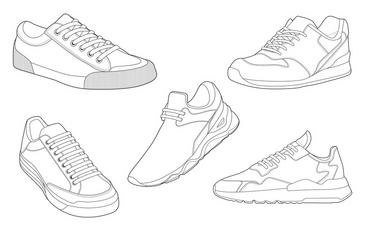
Quick Answer: The Performance Revolution
The evolution of footwear architecture has shifted from basic foot protection to active, underfoot energy return. In the early days of the modern running movement, trainers were flat, heavy, and composed of simple canvas and vulcanized rubber. Today, industry leaders like Brooks and HOKA utilize aerospace-grade chemical engineering—including pressurized, nitrogen-infused compounds for weightless cushioning and curved carbon fiber structural plates that act as mechanical propulsion levers. The design focus has fundamentally moved from merely padding a heavy ground impact to actively propelling the runner forward while slashing lower-frame muscular fatigue.
From the "Waffle Iron" to Modern Materials Science
If you could travel back 50 years and hand a modern pair of HOKA Speedgoats to a marathoner from the 1970s, they might think you were handing them a piece of alien technology. For decades, the running landscape was dictated by a rigid, low-profile design philosophy—the belief that a shoe should be as thin and minimal as possible. However, as our understanding of structural force management and structural chemistry expanded, the lines of footwear design grew right along with it.
Today, the walls at Shoe Station are anchored by thick, maximalist profiles and high-rebound energy-returning compounds that were once deemed mathematically impossible. This structural evolution hasn't just made competitive athletes faster; it has democratized the sport by shielding our joints from repetitive stress and significantly extending our active running lives.
The Four Master Eras of Innovation
1. The EVA Revolution (1970s – 1980s)
The introduction of Ethylene Vinyl Acetate (EVA) foam completely reshaped the industry by permanently replacing heavy, solid rubber midsoles. For the first time, athletic shoes became truly lightweight underfoot, providing a plush layer of micro-cellular air pockets that effectively launched the modern global jogging movement.
2. The Stability Era (1990s – 2000s)
As mileage increased worldwide, designers began focusing on controlling excessive side-to-side ankle motion. This period introduced dense medial posts—hard plastic or high-durometer foam inserts built into the inner arch—exemplified by the legendary Brooks Adrenaline GTS family, which relied on structured alignment to block training injuries.
3. The Maximalist Shift (2010s)
Pioneered by HOKA, this era challenged the minimalist, barefoot movement by demonstrating that a higher stack height—when engineered with an expansive, wide footprint—could be exceptionally stable and featherlight. This era introduced curved sole geometries that completely altered how a shoe interacts with the ground.
4. The Super Foam & Plate Era (2020s – Present)
The current peak of athletic technology. By injecting gaseous nitrogen into liquid foams or utilizing advanced PEBA (Polyether Block Amide) compounds, modern midsoles deliver unparalleled energy return. These systems bounce back instantly, returning a high percentage of striking force straight to the foot.
Classic Ground Feel vs. Modern Mechanical Efficiency
At Shoe Station, we find that runners naturally gravitate toward different technological design eras depending on their tracking habits and comfort goals:
-
Traditional, Grounded Profiles (e.g., Brooks Ghost): This style represents the peak refinement of the classic daily trainer. By utilizing a standard drop and a highly flexible forefoot, these shoes offer a highly stable, predictable, and connected feel that lets your foot muscles actively engage with the road.
-
Modern, Rockered Platforms (e.g., HOKA Clifton): This layout represents the new school of thought. By curving the midsole into a rolling chassis, these shoes act like a rocking chair underfoot. This geometry significantly lowers the workload on your ankle joints, making them a premier option for runners with joint sensitivities looking for a fluid transition.
The Takeaway: Choose a traditional profile if you prefer a flexible, grounded connection to the road. Choose modern rockered tech if your priority is dampening joint impact.
Engineering Inclusion Across the Miles
The greatest achievement of this technological evolution isn't the breaking of elite world records; it is the accessibility it brings to daily fitness. Advanced cushioning systems from Brooks and HOKA have reopened the sport to individuals who previously found high-impact movement far too painful for their knees, shins, or lower backs.
Supercritical, nitrogen-infused foams aren't just for sub-two-hour marathoners—they serve as a protective shield that helps a parent run a neighborhood 5K or keeps a retiree moving comfortably on local park trails. Modern footwear has transformed running from an exclusive club for the naturally shock-resilient into a universal tool for lifelong health.
Actionable Diagnostic: The "Rocker Rhythm" Adaptive Test
If you are transitioning from a traditional flat training shoe to a modern, high-stack rockered platform, your lower leg muscles require a brief period to adapt to the new gait dynamics. Perform this simple test to track your efficiency:
The Standing Balance Check: Put on a rockered model (like a HOKA) on one foot and your old flat shoe on the other. Stand flat and slowly shift your body weight forward onto your toes.
The Verdict: Notice how the rockered sole automatically rolls your center of gravity forward without requiring your calves to flex hard. Because this curved geometry reduces ankle flexion, give your body 2 to 3 short, easy runs to lock into the new stride rhythm. Avoid over-striding; let the shoe's built-in curvature do the rolling work for you to maximize your training efficiency.
Shoe Tech Evolution FAQs
-
What does "nitrogen-infused" foam actually mean? This refers to a supercritical manufacturing process where pressurized nitrogen gas is injected into a liquid mid-sole material. As it cools, it creates highly consistent, microscopic gas bubbles that yield a lighter, vastly more responsive foam platform than traditional, heavy EVA slabs.
-
Are older, more traditional shoe silhouettes still safe for daily runs? Absolutely. Top-tier brands like Brooks keep time-tested heritages like the Ghost in their lineup because their balanced geometry and predictable heel-to-toe drops are exceptionally reliable for millions of standard running gates.
-
Why have modern athletic shoes gotten visibly thicker? Stack heights increased because advanced chemical engineering allowed brands to formulate ultra-lightweight foams. Designers can now layer a massive, protective buffer of underfoot shock absorption without adding any heavy, unwanted weight to the shoe.
-
What is the purpose of HOKA's "Meta-Rocker" design? The Meta-Rocker is a proprietary curved outsole profile engineered with a low heel-to-toe drop. It acts as an underfoot fulcrum, eliminating flat dead spots in your stride and guiding your foot through a smooth, rapid transition from initial heel-strike to final toe-off.