
Sizing & How-To
How to Clean Smelly Running Shoes Without Damaging Them
AUG. 27, 2026
Quick Answer: The Odor-Eliminating Restoration Protocol
Cleaning smelly running shoes requires lifting embedded bacteria and sweat without destroying technical midsole foams or weakening outsole glues. The golden rule: never submerge running shoes in hot water or toss them into a high-heat clothes dryer, as heat warps tuned foam stacks, warps carbon plates, and breaks down structural adhesives. To safely restore fresh-smelling performance, remove the insoles and laces, scrub uppers with a mild antibacterial solution, and allow them to air-dry at room temperature with moisture-absorbing paper. Shop fresh performance trainers and sneaker care kits in-store at Shoe Station.
Why Running Shoes Stink (And How Heat Ruins Performance Tech)
Running shoes are precision tools engineered with gas-infused foams (like EVA or TPU), breathable mesh uppers, and specialized structural adhesives. During a typical training run, foot sweat, dead skin cells, and road grime accumulate inside the open-cell foam insoles and textile linings. Dark, damp environments create the ultimate breeding ground for odor-causing bacteria.
When runners attempt to fix smelly shoes by throwing them into a hot washing machine or dryer, the extreme agitation and high temperatures break down the delicate foam cells that provide shock absorption. By following a gentle, material-safe cleaning method, you can eliminate foul odors while preserving the structural integrity of your favorite trainers.
Running Shoe Odor & Cleaning Protocols
1. Deodorize & Sanitize Removable Insoles
The footbed insole absorbs up to 80% of daily foot sweat, making it the primary source of shoe odor.
- The Method: Pull the insoles completely out of your running shoes. Submerge them in a sink filled with warm water and 2 tablespoons of baking soda or 1 cup of distilled white vinegar. Let them soak for 30 minutes to neutralize odor-causing bacteria. Gently scrub with a soft brush, rinse with cool water, and let them air-dry completely.
2. Clean the Breathable Mesh Uppers
Technical mesh and knit uppers hold dirt and sweat within their porous weaves.
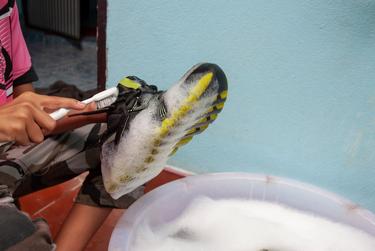
- The Method: Mix warm water with a few drops of mild dish soap or gentle laundry detergent. Dip a soft-bristled toothbrush or nylon brush into the solution and scrub the upper using small circular motions. Blot away dirty suds with a clean microfiber towel.
3. Refresh Laces & Clean Midsoles
Dirty, damp laces contribute to overall odor, while mud-caked midsoles block performance flex.
- The Method: Unlace your shoes and soak the laces in warm, soapy water for 15 minutes. For foam midsoles and rubber outsoles, use a soft brush or Magic Eraser damp with soapy water to scrub away road grime, then wipe dry with a towel.
Actionable Diagnostic: The "Dry-Pack" Moisture & Odor Audit
Drying running shoes correctly after a wet run or cleaning session is vital to preventing bacterial growth. Perform this simple 3-step drying check:
After scrubbing, remove excess moisture by pressing a clean, dry towel against the inside and outside of the shoes. Stuff the interior tightly with plain white paper towels or clean newsprint (avoid colored ink paper, which can bleed).
- The Verdict: Place your shoes to dry in a well-ventilated, cool indoor room completely away from heat vents, radiators, and direct UV sunlight. UV rays and direct heat harden midsole foams and yellow white mesh. Replace the damp paper towels after 3 to 4 hours to accelerate moisture draw. Allow a full 24 to 36 hours for complete air-drying before your next run.
Smelly Running Shoe FAQs
Can I put my running shoes in the washing machine on a gentle cycle? While a cold, gentle machine cycle inside a mesh laundry bag is safer than hot water, hand-scrubbing is always preferred. Machine agitation can stretch out engineered mesh uppers, weaken lace eyelets, and cause premature separation between the outsole rubber and midsole foam.
How can I prevent my running shoes from smelling between workouts? Remove your shoes immediately after running and unlace them completely to open up the tongue. Pull the insoles halfway out to promote airflow, and drop cedar shoe inserts or activated charcoal deodorizer pouches inside the toe box to absorb lingering humidity.
Is it safe to spray Lysol or rubbing alcohol inside running shoes? Yes, in moderation. A light mist of diluted isopropyl alcohol or antibacterial shoe spray eliminates surface bacteria. Spray the interior lightly after your run and allow the shoes to dry in a ventilated room before wearing them again.
When is a smelly running shoe beyond saving? If deep-set odors persist after soaking the insoles and scrubbing the uppers, or if the internal foam padding feels stiff, flattened, or compromised, the shoe has likely reached the end of its functional lifespan (typically 300 to 500 miles). Treat your feet to a fresh pair of performance trainers at Shoe Station.